


Each year, during the UNFCCC Conference of Parties (COPs) the world tunes in to devote attention to the state of climate change. Global news outlets resume grappling with the challenging nuances of how climate change is affecting our shared world and exactly what is being done to address it. At first glance, the obvious headline declares that multilateralism is failing: that the years of slow-paced climate negotiations progress is slipping under the weight of urgent threats regarding increased natural disasters and precarious geopolitical conditions. But a closer look at what is actually happening on the ground in Belém during COP30 seems to send a different signal: the Paris Agreement is working, but faster and wider action is needed.
According to Carbon Brief, COP30 had 56,118 delegates registered, setting this year’s Climate Talks to be second-largest in history, behind only COP28 in Dubai, which was attended by more than 80,000 people. The idea of thousands and thousands of people traveling in carbon-heavy pathways to flood a small city in the Amazon to convene discussions on how to lower emissions had pre-emptively provoked many to question the sanity of the process. In a more concrete manner, the UNFCCC Secretariat released three important reports: the Biennial Transparency Report (BTR) Synthesis Report; the NDC Synthesis Report; and the NAP Synthesis Report. The data contained described the collective efforts made by countries, or parties, to progress commitments to the Paris Agreement which has resulted in measurable progress to reduce global emissions and improve resilience. Despite these successes, however, the reports clearly indicate that this progress is not enough.
This COP, from the start, has been dubbed as one that has to be ambitious; to be a COP of action and implementation. Considering that this year’s gathering had no specific big decisions on the table, the host country in its Presidency set to shift focus from the blue zone, the area only accessible to negotiators, to the green zone, “where the action is happening.”
“We closed the rule book in COP29. Obviously, there are many important negotiations that we have in COP30 … but most of what we needed to negotiate has been negotiated. So now we need to start a new decade and it is a decade of speeding up, accelerating and scaling implementation. I think we have the general direction, we have the global stocktake. We know where we need to go now. We need to talk to the implementers and bring them closer to the COPs. And those are subnational governments, civil society and definitely the private sector.”
COP30 Chief Executive Officer Ana Toni
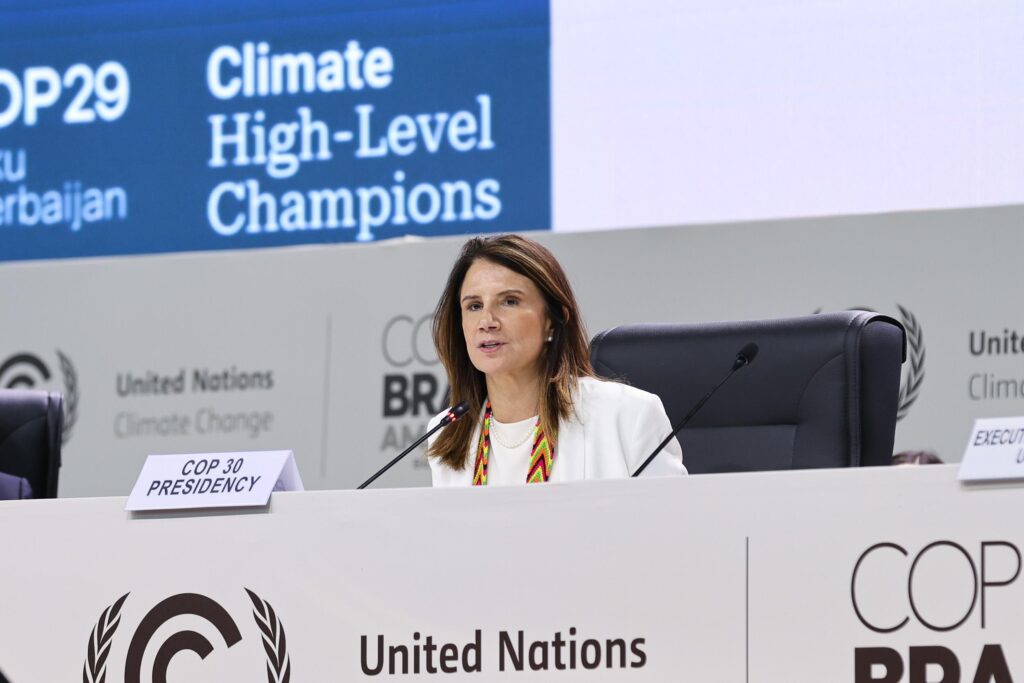
Photo by IISD/ENB | Mike Muzurakis
In the re-imagined focus on the Action Agenda, an opportunity opened to invite leadership from across all of society. Voluntary commitments have emerged not as just “nice to have” but acknowledged as a very important part of the architecture for change. The emerging value for actions of civil society, businesses, investors, cities and states arrives at a moment in time where there is a very real breakdown of trust.
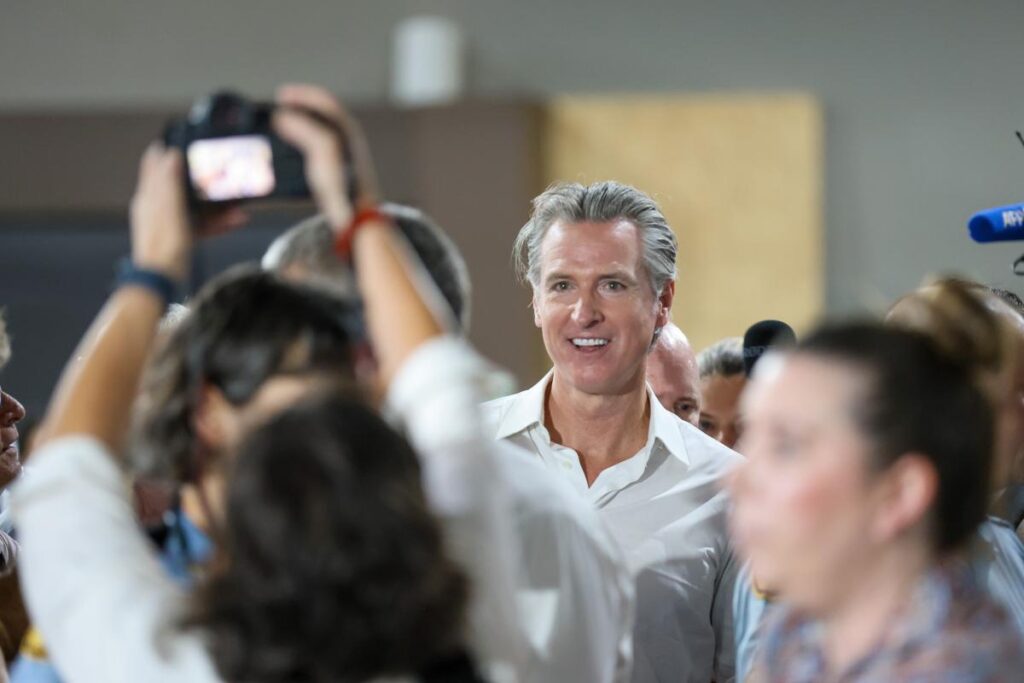
Photo by IISD/ENB | Mike Muzurakis
For example, the United States pulling out of the Paris Agreement threatened to create a trend among other nations. What has transpired is actually the opposite. In the absence of US representation in the official negotiating seat, local and subnational leaders from the US have joined others to make historic advances. As such, emerging as the leaders who are truly moving the needle are the local, subnational leaders.
As a testament to this growing leadership, the C40 World Mayors Summit 2025 convened from 3-5 November in Rio de Janeiro, Brazil in parallel to the Leaders Summit. The outcome was a “Message from Local Leaders to COP30” which contained support from more than 14,000 local leaders and was handed to UN Secretary-General António Guterres. This message outlined strategic commitments and actions designed to accelerate global progress during what they call “the decisive decade” for climate action, calling for partnerships, mobilising finance to local projects and increased accountability to deliver a just transition.
“The presence of governors and mayors is extremely important, because [they] have an absolutely essential role in implementing the decisions of the COPs.”
COP30 President André Corrêa do Lago
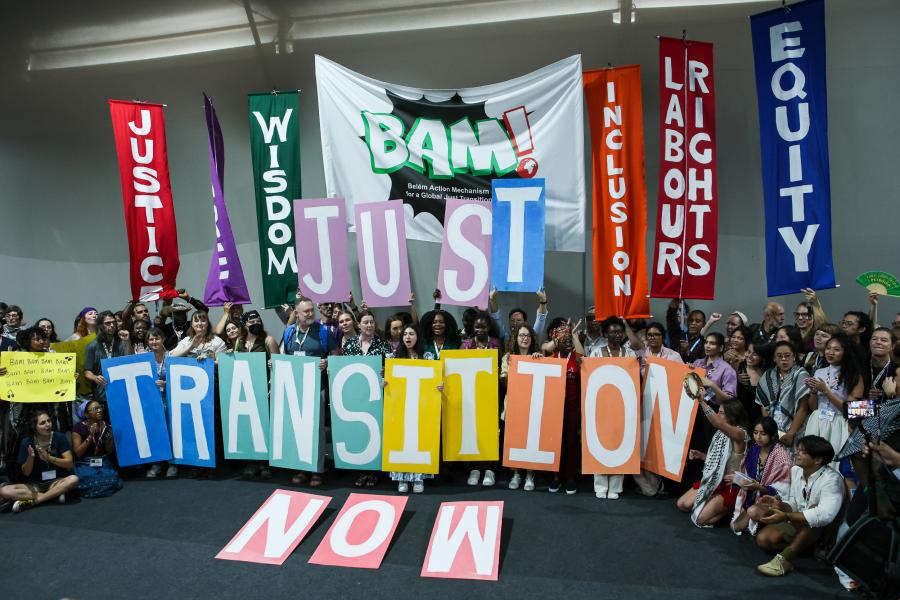
The call for a just transition is increasingly heard throughout the halls of the climate talks. Specifically, COP30 had the task of advancing the Just Transition Work Programme (JTWP), the UNFCCC’s first dedicated framework for advancing equitable, people-centred climate action. Originally established at COP27 in Sharm el-Sheikh and operationalised at COP28 in Dubai, the goal is to exchange experiences and policy approaches to achieve low-emission, climate-resilient transitions that create jobs, protect workers, and promote social inclusion.
On 18 November, the Third Annual High-Level Ministerial Round Table on Just Transition convened to highlight some of the key political messages and guide further implementation of the work programme.
MedWaves is committed to contributing to a just transition, specifically through working at a regional level to empower local and subnational leadership. The ‘Working paper on local governance of the just transition to circular economy and the role of appropriate responsibility: Lessons from real-life experiences governing decarbonization,’ MedWaves revisits how the circular economy is an important tool to deliver the just transition, investigating closely how to empower local governance structures to push further progress in decarbonisation.
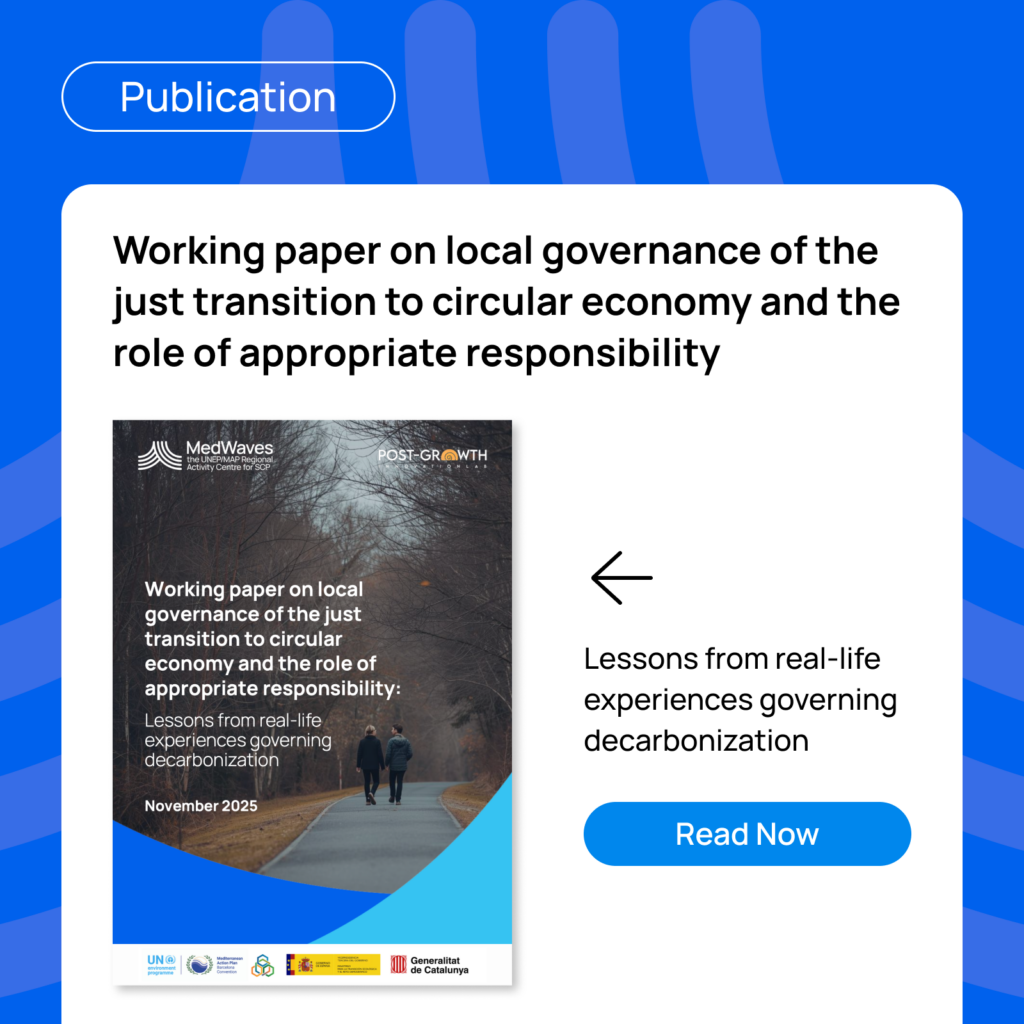
In the effort to examine how local governance can effectively facilitate a just transition to a circular economy, the paper focused on climate change mitigation governance as a benchmark. The clear emphasis is on integrating justice into environmental governance, which is made clear through a comparative analysis of six real-world initiatives. This research reveals that prompting climate action through shared commitments, technical support, resource provision, and advocacy are important and require inclusive planning, expert collaboration, and multilevel coordination.
There is a challenge that surfaced across the case studies: weak enforcement mechanisms. Therefore, several important policy recommendations reflect the need to inter alia:
The potential of local governance to lead the just transition to a circular economy is made clear. Although there exists promising models, the paper highlights important gaps that remain in integrating justice, coordinating actions, and securing resources. To continue this work, future research could focus on replicability, financial frameworks, and the extension of ACR principles beyond climate change to address broader challenges in CE.
COP30 presidency introduced “Mutirão”, originally from the Tupi-Guarani language as inspiration. The term that can be translated here as “Global Mutirão” (meaning “collective efforts”), was meant to encourage climate action worldwide. This concept has permeated through discussions and negotiations. The path ahead is one that requires a whole of society approach.
“I think COP30 starts a new era of COP’s because it took us so long to act in this direction now that everybody is with us, we need to ensure that we can make the change we need to make with the speed that is required.”
COP30 Chief Executive Officer Ana Toni
Want to receive our news and updates directly to your inbox? sign up for our Newsletter!


 Print
Print