

The close of the 2025 multilateral environmental negotiations season brings an invitation to digest what has transpired. From the Climate Talks in Belém to the Barcelona Convention COP24 in Cairo, clearly there is a signal: we know what needs to be done, the question is how? There has never been a more urgent time to face the climate challenge and stimulate rapid decarbonisation. GoZero Programme draws down these concepts and delivers on the local and regional level by providing specific tools to achieve progress.
Addressing climate challenges truly is a whole of society’s responsibility. Small and medium-sized enterprises (SMEs) have a crucial role in the collective effort to decarbonise. This is because as these businesses manage their own emissions, they become a leverage to extend change throughout their supply chains and influence their communities of consumers and producers. MedWaves drives sustainability in the Mediterranean by supporting businesses and green entrepreneurs with training, advice, funding, and networking to develop circular, innovative business models that create jobs and protect the environment.
The GoZero Programme, powered by MedWaves under the framework of the Switchers Support Programme, is a climate and circularity accelerator for Mediterranean SMEs. The programme grounds ambition with action; empowering SMEs to be the leaders of circular, low-carbon business models in the textile and agro-food sectors across nine Mediterranean countries (Algeria, Egypt, Italy, Jordan, Lebanon, Morocco, Palestine, Spain or Tunisia). This is how companies are able to become climate resilient, more circular, and competitive. So far, the programme has selected around 40 SMEs to take part in workshops and intensive activities that offer specific support to reduce carbon footprint, enhance circularity, and unlock new market value.
GoZero incubates SMEs through three phases designed to help each selected company understand their own sustainability maturity, define key performance indicators, and track progress. The companies moving through the programme establish their own sustainability vision with a tailored roadmap of actions. The initial programme finishes in January 2026, however there will be follow-up sessions for the participating SMEs in 3, 6 and 12 months.
During the first phase of engagement, selected SMEs are supported to join an online portal, custom-designed to support each business in producing their own environmental diagnosis of operations and drawing the life cycle of their products. The participants calculate their carbon footprint with a customised tool made for the programme. Through one-on-one contact with mentors, they are able to refine these outputs and compile indicators of what they could address in their transition to a circular business model, such as consumption or waste.
In the second phase, the selected SMEs meet for a three-day workshop to evolve their progress through training and networking. Finally, in the third phase, the businesses are able to launch their action plans where they bring in the eco-design strategies and begin to map where they will see results.
The GoZero Programme organised a three-day immersive workshop in Tunis, Tunisia 4-6 November specifically aimed to connect with SMEs in the textile sector. Considering that the textile sector is connected to nearly all people on the planet, and the region’s legacy of working in textile production, this workshop provided an opportunity to re-imagine how to transition to circular models of business. Over the course of the days together, keynotes, pitches, interactive sessions, site visits, and plenty of opportunities for networking among the selected participants.
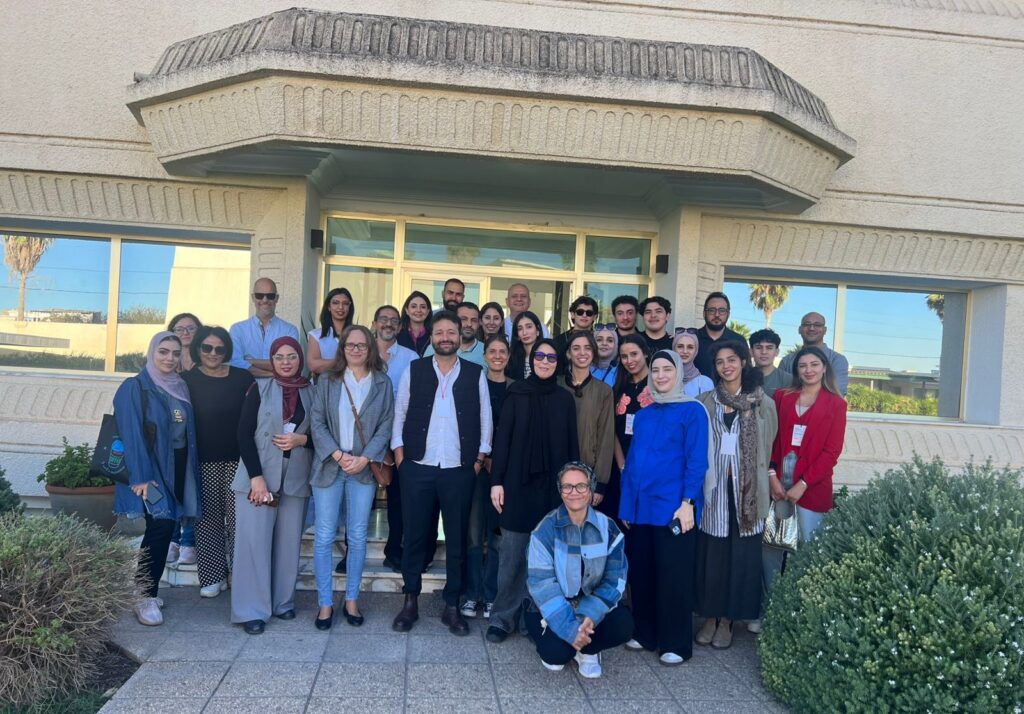
GoZero Programme – BootCamp Tunis – Textile Sector
The second Bootcamp took place 25-27 November in Barcelona devoted to SMEs in the agrifood industry. The workshop established space to review components created by the SMEs and take a deeper dive in understanding how their lifecycle analysis, from packaging, transport, storage, and waste, can be addressed.
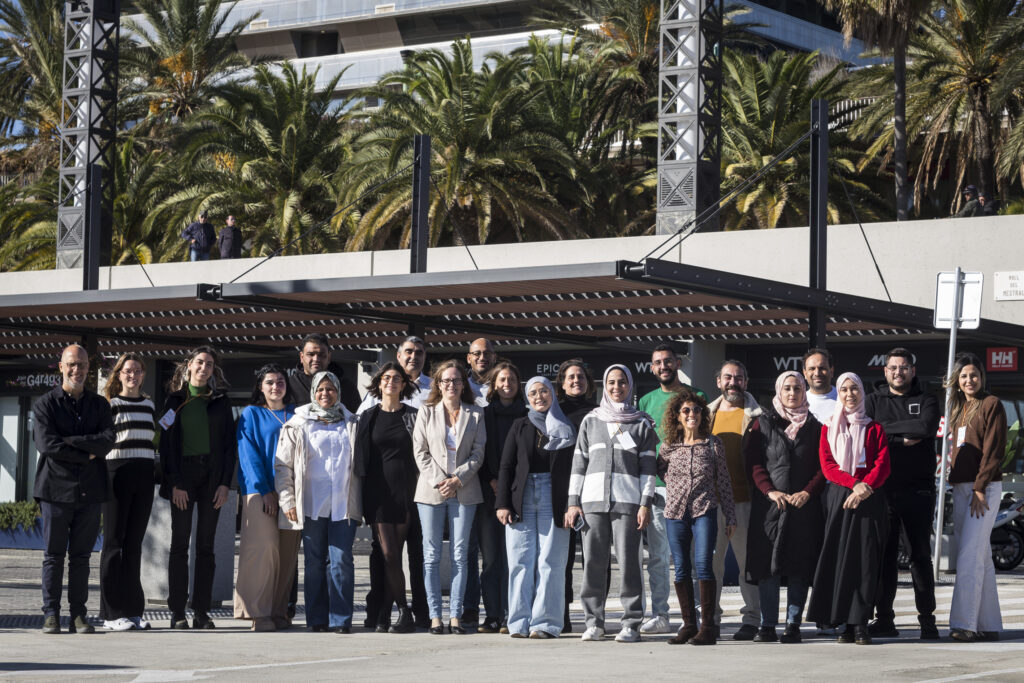
GoZero Programme – Bootcamp Barcelona
The GoZero! programme is successful in many ways, but perhaps most importantly in helping to shift mindsets and behaviors. Brief interviews with attending representatives of the SMEs reveal the power of the support and tools being shared.
~Could you summarise in one line the most unexpected or valuable practical insight you gained from the ‘Go Zero Waste’ workshop?~
Rana, My Smart Wardrobe (Lebanon): “The biggest insight I gained was that waste is not only about materials but also about missed value — and that mapping every output in our process can uncover new circular opportunities that we can implement such as re-sale.”
Amre Soliman, Egyptian Cotton Hub (Egypt): “The one takeaway that impressed me the most was the information we received on the regulatory climate and where things are heading in the EU. This is what I have been conveying to my colleagues here and we plan to comply accordingly.”
Georges Youssef, Agrocedrus (Lebanon): “The most valuable insight I gained was realising how small, data-driven adjustments in material flows can immediately unlock new circular opportunities and reduce operational waste.”
Dr. Fathia Hamzaoui, Restaurant Universitaire Ali Douagi (Tunisia): “The most valuable idea we took away from the GoZero Bootcamp was the immediate installation of a smart device to measure food waste in real time. This simple yet transformative procedure allows us to engage the entire team in concrete waste reduction as soon as possible, transforming an abstract goal into a daily indicator.”
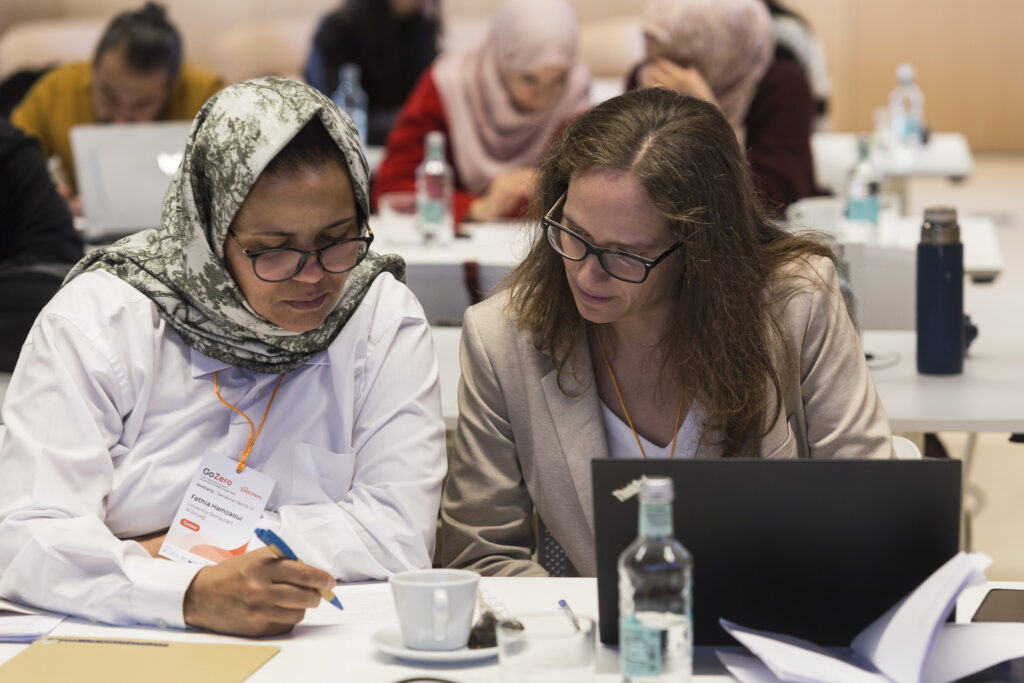
Bootcamp Barcelona
~What specific tool, connection, or piece of advisory guidance from this program is going to immediately help your company scale its environmental impact?~
Mariam Attia, Knitwear Manufacturing (Tunisia): “The practical guidance on mapping material flows and identifying reuse/upcycling opportunities will immediately help us recover leftover fabrics and reduce waste, boosting both sustainability and resource efficiency.”
Rana – My Smart Wardrobe (Lebanon): “The program’s life-cycle assessment and CO₂ measurement tools, combined with expert guidance on impact reporting, will help us quantify and communicate the true environmental savings of each restoration order — a crucial step to scaling My Smart Wardrobe’s positive impact.”
Tatiana Chahine, Ghallatouna (Lebanon): “The most valuable support was the advisory guidance on mapping our environmental hotspots. It gave us a clear roadmap to prioritise actions like energy efficiency and waste reduction, which will significantly scale our impact.”
Dr. Fathia Hamzaoui, Restaurant Universitaire Ali Douagi (Tunisia): “The impact doesn’t come from a single factor. The most transformative tool is undoubtedly the integration of ecodesign, which we explored to rethink our processes and menus. But it was the connection that proved most powerful: the exchange with our Mediterranean counterparts (MENA best practices) and visits to exemplary sites like Espigoladors provided tangible proof of feasibility. Finally, the crucial advice on managing greenwashing ensures transparent and credible communication with the university community.”
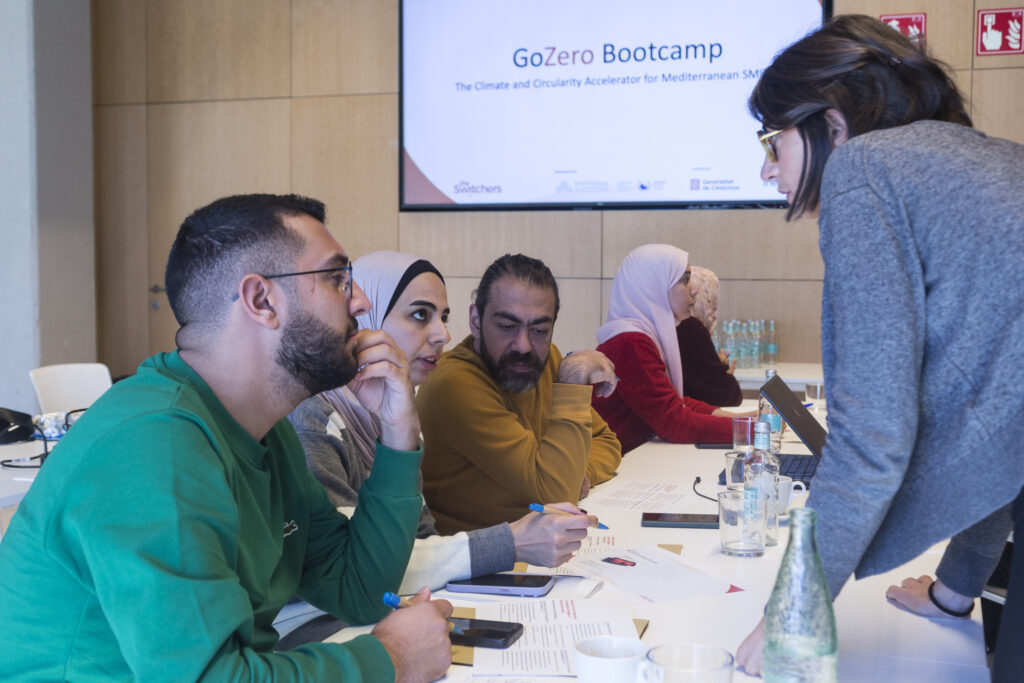
Bootcamp Barcelona
~Which circular strategy(ies) / action have you learned about these days would allow your business to significantly reduce your CO2 emissions?~
Mariam Attia, Knitwear Manufacturing (Tunisia): “Implementing a circular design approach prioritising durable (which we need to discuss first to our clients as they are the ones who provide the design), reusable materials and optimising production processes can significantly lower CO₂ emissions by reducing material waste and energy consumption across our supply chain.”
Rana, My Smart Wardrobe (Lebanon): “Extending product life through repair and restoration is our core circular strategy, but I now see the potential of integrating material recirculation with partners I have met in the program.”
Tatiana Chahine, Ghallatouna (Lebanon): “Adopting renewable energy, improving equipment efficiency, and optimising packaging to reduce waste were the strategies that stood out as the most effective way for us to cut CO₂ emissions.”
Georges Youssef, Agrocedrus (Lebanon): “Adopting a full valorisation strategy for by-products, especially transforming all carob residues into high-value products such as animal feed and soil enhancers, stood out as the most impactful circular action to drastically cut our emissions while creating new revenue streams.”
Dr. Fathia Hamzaoui, Restaurant Universitaire Ali Douagi (Tunisia): “To significantly reduce our emissions, the key strategy will be to combine a drastic reduction in food waste and the acceleration of our on-site composting program. These actions, coupled with the green financing opportunities identified during the workshops, will allow us to invest in energy efficiency. We are thus tackling our carbon footprint on two major fronts: reducing demand and recovering unavoidable waste.”
For more information about the programme click here.
Want to receive our news and updates directly to your inbox? sign up for our Newsletter!


 Print
Print