


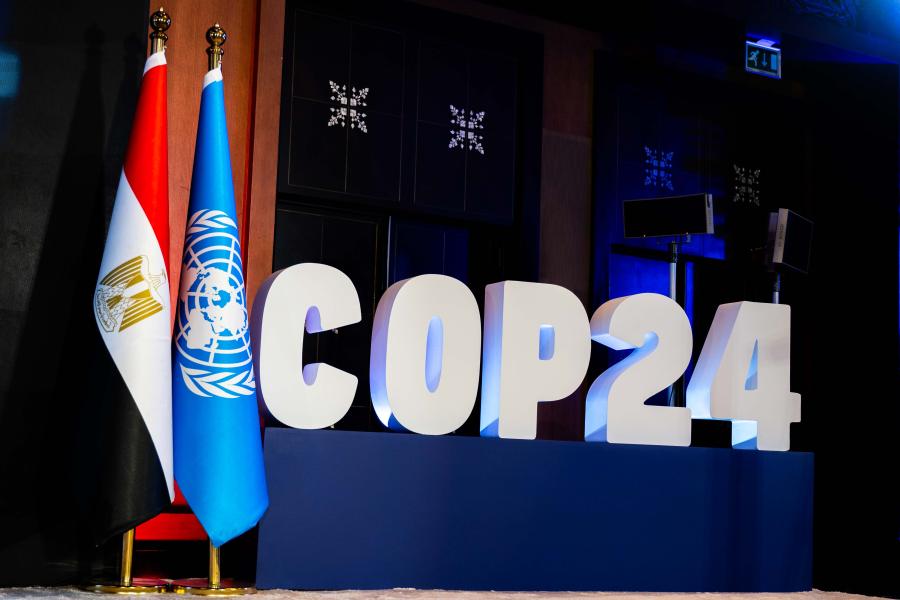
In the face of skepticism regarding the value and impact of global environmental multilateralism, the Barcelona Convention stands strong as an example of how to knit aspiration to progress. As a regional framework, the Convention draws together Contracting Parties to work together collectively on global challenges of halting degradation of biodiversity, advancing decarbonisation, and addressing plastic pollution. This year, the 24th Meeting of the Contracting Parties (COP24) to the Convention for the Protection of the Marine Environment and the Coastal Region of the Mediterranean (Barcelona Convention) and its Protocols continued progress, convening 2–5 December 2025 in Cairo, Egypt.
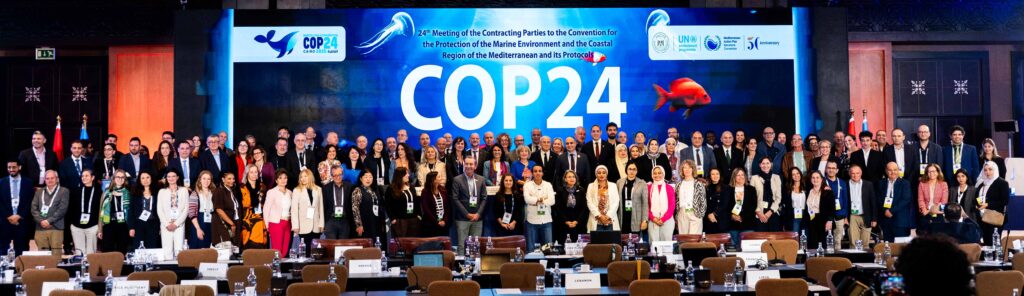
COP 24 Participants / Photo by IISD/ENB | Mika Benoni
The Barcelona Convention, originally called the Convention for the Protection of the Mediterranean Sea Against Pollution, was adopted on 16 February 1976 in Barcelona, Spain and entered into force in 1978. Renamed in 1995 as the Convention for the Protection of the Marine Environment and the Coastal Region of the Mediterranean, the Barcelona Convention, and its seven Protocols adopted in the framework of the Mediterranean Action Plan (MAP) constitute the principal regional legally binding Multilateral Environmental Agreement (MEA) in the Mediterranean.
What does it mean? The countries that have signed the Convention, Contracting Parties, have taken the responsibility to put into force the provisions and Protocols “to prevent, abate, combat and to the fullest possible extent eliminate pollution of the Mediterranean Sea Area and to protect and enhance the marine environment in that Area so as to contribute towards its sustainable development.” As a regional framework, these responsibilities engage Parties in a manner that facilitates collaboration and partnerships. MedWaves is a component of the MAP-Barcelona Convention system, delivering essential expertise for the execution of the Convention. MedWaves is one of eight Regional Activity Centres (RACs) mandated to help maintain a shared sense of direction and common purpose.
COP24 took place this year in Cairo, Egypt from 2-5 December, coinciding with the celebration of 50 years of UNEP/MAP. Inger Andersen, Under-Secretary-General of the United Nations and Executive Director of the United Nations Environment Programme, reflected on the anniversary: “The long history of UNEP/MAP and the Barcelona Convention means that, even in complex geopolitical times, the 22 Contracting Parties maintain strong cooperation to tackle everything from dumping and hazardous wastes to protected areas and integrated coastal zone management. And the Contracting Parties have indeed posted some real successes down the years.”
Some of the notable successes made through coordination with the eight Regional Activity Centers include:
COP24 met under the theme “Mediterranean Blue Growth: Towards a Resilient and Sustainable Future”. In order to realise the potential of the Convention to help address the challenges of climate, biodiversity loss and pollution under this theme, participants met in a Ministerial Session: “Sustainable Blue Economy for a Resilient and Healthy Mediterranean” and hosted a dinner: Women’s Leadership for Environment and Development in the Mediterranean. COP24 also adopted the Cairo Ministerial Declaration, the Mediterranean Strategy for Sustainable Development 2026-2035, and a Regional Climate Change Adaptation Framework for the Mediterranean Marine and Coastal Areas 2026-2035.
The Cairo Ministerial Declaration contains many important elements that will continue to drive Contracting Parties. Specifically relevant to the work of MedWaves are the mention of: prevention and reduction of plastics and single-use plastic products and call to adopt circular economy and Sustainable Consumption and Production (SCP); promotion of eco-innovation and circular economy, safeguarding environment and promoting climate neutrality, with social outcomes; and value of climate actions and just transition.
Additionally, there were signing of Memorandums of Understanding between UNEP and the Centre for Environment and Development for the Arab Region and Europe (CEDARE which is a historic strategic partner of MedWaves and partner of the Waste2Fashion project, funded by Interreg NEXT MED), as well as between UNEP and MedCities, a regional network of 57 cities and metropolitan areas from 15 Mediterranean countries that works to promote urban sustainable development. The Spanish city of Almería was announced as the winner of the Istanbul Environment Friendly City Award (2024-2025), recognised for its blue governance as a key element driving progress and underscored the importance of integrating research, monitoring, and modelling.
During a side event “Pathways to a Thriving Mediterranean Blue Economy: Resilience, Innovation, and Sustainability” led led by the Innovative Sustainable Economy (ISE) Mission of the Interreg Euro-Med, of which MedWaves is partner), there was a focus on the blue economy and presentation of the new flagship initiative on sustainable blue tourism under the Mediterranean Strategy for Sustainable Development (MSSD). Specifically, it addressed the perspective of a Blue Resilient Economy and showcased two Interreg projects from the ISE Mission: AZAICE and 2B-BLUE. AZAICE is developing spatial tools for aquaculture, while 2B-BLUE (the algae project) is working on blue biotechnology for aquatic ecosystem restoration. By convening policymakers, practitioners, and regional partners, this event coordinated pathways for a thriving Mediterranean Blue Economy—one that protects nature, expands opportunity, and ensures that blue tourism and related sectors become lasting sources of prosperity and resilience for future generations.
The Mediterranean Strategy for Sustainable Development is a key piece of the Barcelona Convention, serving as a blueprint to deliver how the region will effectively address global challenges. A Commission dedicated to developing the appropriate architecture that will serve as a platform for a ten-year period met several times, ready to deliver to COP24 the structure for adoption. During a dedicated session for the adoption of the new Mediterranean Strategy for Sustainable Development (MSSD) 2026–2035, MedWaves organised several Working Groups on circular economy. Through these sessions, key stakeholders were invited to guide discussions and identify emerging challenges, trends, and priorities related to Sustainable Consumption and Production in the Mediterranean region.
During COP24, representatives from the 21 Contracting Parties and the European Union, along with United Nations bodies, intergovernmental organisations, and civil society fine-tuned this strategy to ensure it could maintain review of progress, adopt decisions, and set priorities for safeguarding the marine and coastal environment of the Mediterranean, in alignment with the UNEP/MAP Medium-Term Strategy 2022–2027. Many discussions considered whether targets were aspirational versus binding, ensuring that there was consensus for adoption.
The final adopted Strategy focuses on green finance, climate resilience, integrated approaches and enhanced monitoring, and a just transition to a blue/green economy. There is also a clear call for increased inclusivity, engaging local actors, women and youth. Mohamed Rafat, Co-Coordinator of the MSSD Flagship Initiative on the Mediterranean Youth Group, delivered statements, calling for: “a permanent structure for youth engagement, backed by financial support; equitable access to renewable energy technologies; and incentives for youth-led circular economy hubs.”
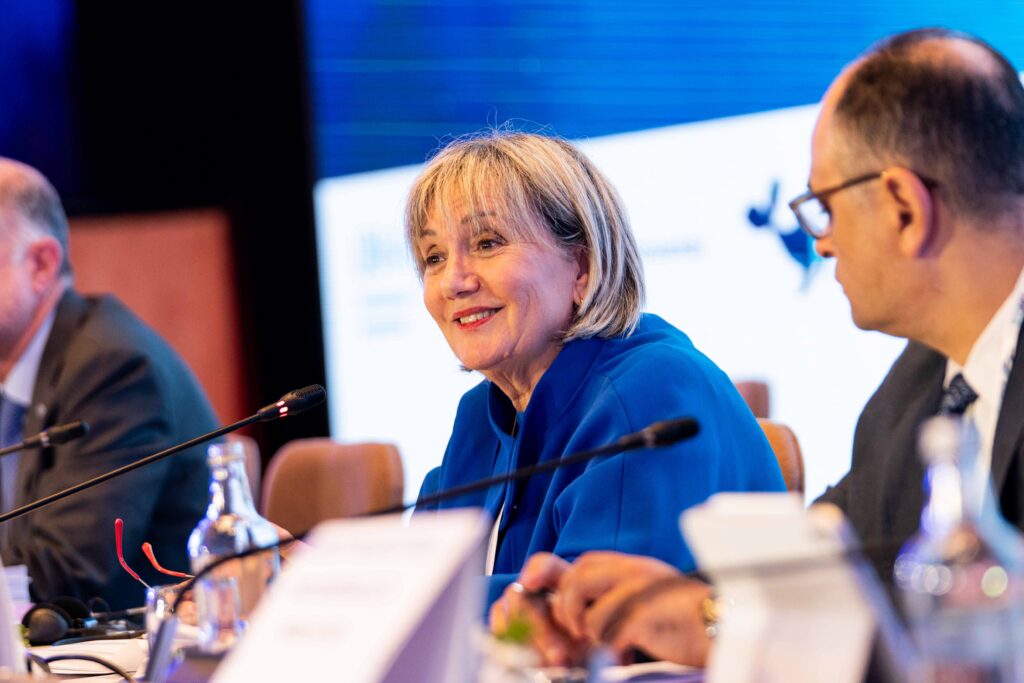
Tatjana Hema, Coordinator of UNEP/MAP – Barcelona Convention Photo by IISD/ENB | Mika Benoni
The success of COP24 will be revealed as Parties return home and begin to put in place the policies and programmes that ground the aspiration to action. Tatjana Hema, UNEP/MAP Coordinator, described the take-home messages from COP24 as solidarity, consensus, and going in the right direction, adding that “the next biennium to COP 25 starts tomorrow!” COP25 will be hosted in Croatia in 2027. Croatia emphasised that “hosting COP25 is both an honor and a responsibility that Croatia embraces with full seriousness and enthusiasm.”
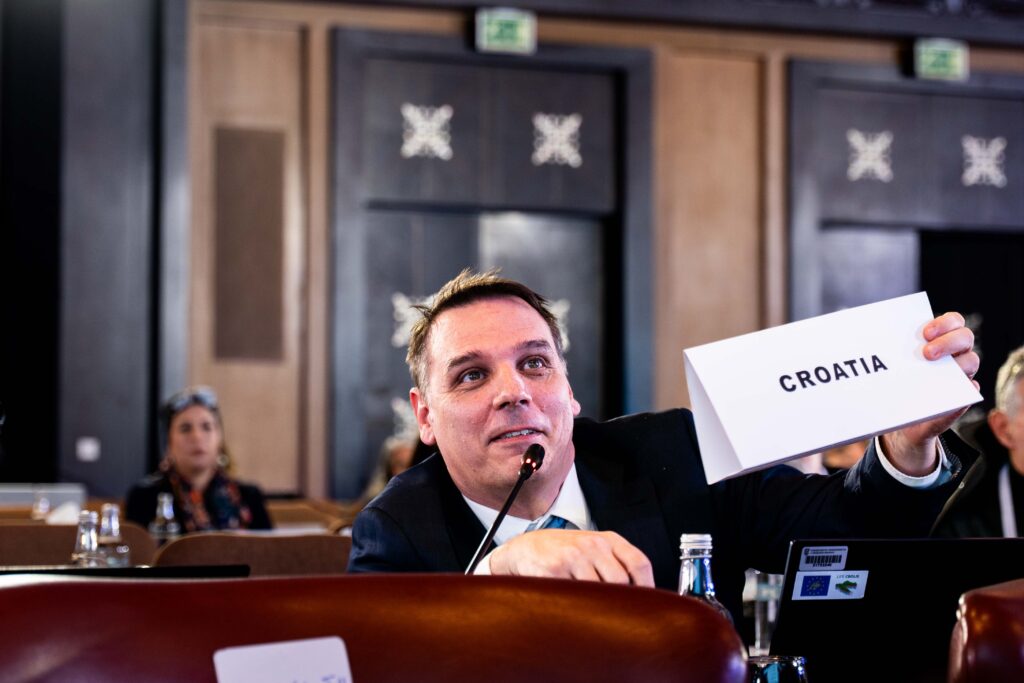
Domagoj Krnjak, Croatia
Photo by IISD/ENB | Mika Benoni
________________________
Want to receive our news and updates directly to your inbox? sign up for our Newsletter!


 Print
Print